


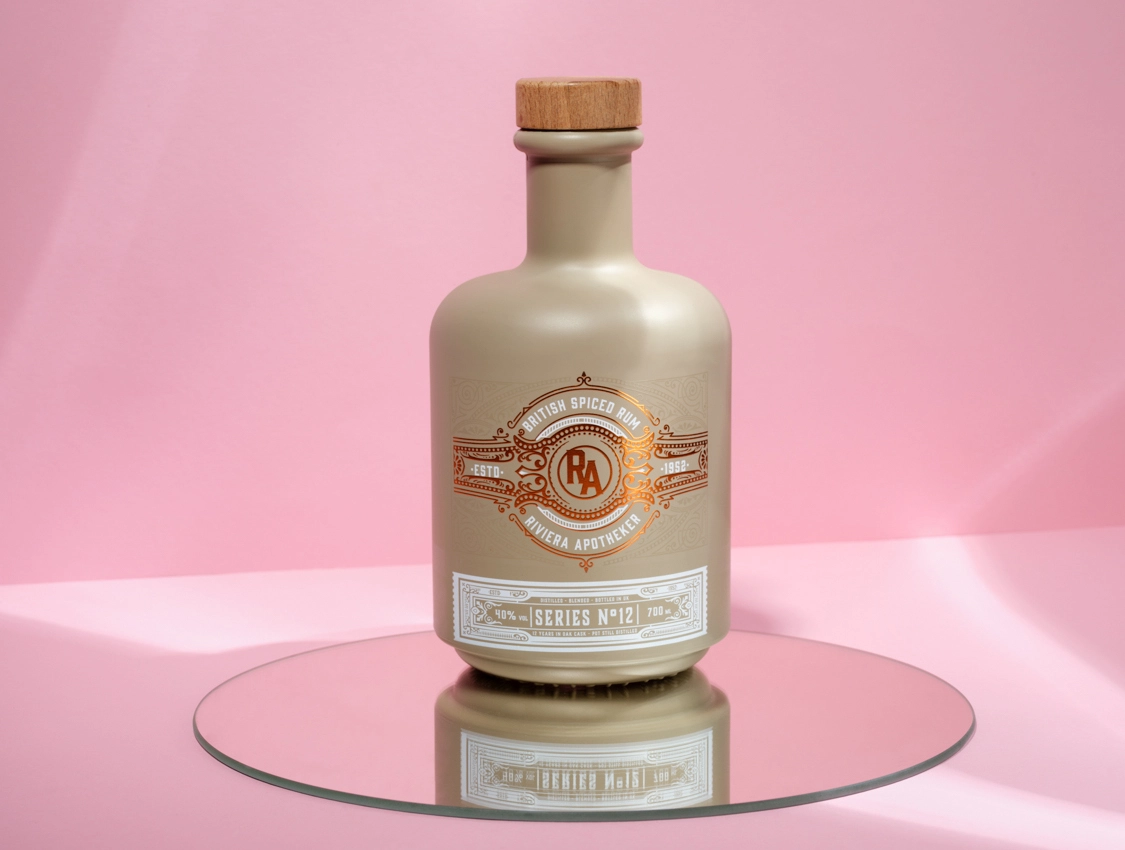
Glass has always been associated with quality, purity, and trust. For decades, it has been the material of choice for premium beverages, cosmetics, and specialty food products. Yet in today’s crowded markets, glass alone is no longer enough to differentiate a product. What increasingly defines shelf impact and brand perception is how the glass surface is treated.
This is where coating becomes a critical element of modern packaging strategy. Far from being a purely decorative layer, glass coating influences visual depth, tactile experience, functional durability, and even how a consumer emotionally connects with a product.
What Glass Coating Really Is – Beyond Decoration
Glass coating is the process of applying a controlled surface layer to a glass container in order to modify its appearance, feel, or performance characteristics. Depending on formulation and application method, coatings can be transparent, semi-transparent, or opaque; matte, satin, or glossy; smooth or subtly textured.
Unlike printing or embossing, coating interacts with the entire surface of the bottle rather than isolated graphic areas. Because of this, glass coating is often treated as a foundational process in premium packaging rather than a final embellishment.
In practice, coating acts as a bridge between raw glass and decorative techniques, shaping how light behaves on the surface and how the container feels in the hand.
The Role of Coating in First Impressions
A consumer’s first interaction with a product is almost always visual and tactile. Coating directly affects both.
Matte coatings soften reflections and create a restrained, understated premium look. Gloss finishes amplify colour saturation and depth, making bottles more eye-catching on shelf. Semi-transparent coatings allow brands to filter light while preserving visibility of the product inside — a common requirement in spirits and cosmetic packaging.
Equally important is touch. Coated glass feels warmer, more controlled, and more intentional than untreated surfaces. Even without conscious analysis, consumers associate these tactile cues with higher quality and attention to detail.
Functional Benefits That Go Unnoticed – but Matter
One of the most common misconceptions about glass coating is that it exists purely for aesthetics. In reality, coating often solves practical problems that standard glass cannot.
Coatings can improve grip, reducing slippage during handling. They can offer limited protection against micro-scratching during transport. In some applications, coatings help control light exposure, contributing to product stability.
From a production standpoint, coating can also serve as a technical base layer, improving adhesion for subsequent decoration processes and increasing consistency across large production runs.
Coating as Part of a Layered Decoration Strategy
In contemporary packaging design, coating is rarely used in isolation. It is most effective when integrated into a broader decoration system.
A matte or coloured coating can establish the visual “canvas” on which other elements operate. Logos, typographic accents, or metallic details become more pronounced when applied selectively over a treated surface. This layered approach allows brands to create contrast and hierarchy without overcrowding the design.
Technically, a well-specified coating also stabilises downstream processes, reducing defects and variability when multiple decoration techniques are combined.
When Coating Is the Right Choice – and When It Isn’t
Despite its versatility, coating is not a universal solution. Its effectiveness depends heavily on how and where the product will be used.
Coating is particularly well suited for premium packaging with controlled life cycles, retail-focused presentation, and limited mechanical stress. It performs best where visual impact and tactile quality outweigh extreme durability requirements.
For heavy-reuse, industrial, or aggressive washing environments, alternative surface treatments may be more appropriate. Understanding this distinction early helps align design ambition with technical reality.
Why Coating Should Be Planned Early, Not Added Later
One of the most frequent sources of production issues in glass decoration is treating coating as an afterthought. Once bottle shape, glass colour, and decoration methods are locked in, coating options become constrained.
When coating is considered from the start of a project, it becomes a design enabler rather than a limitation. Early planning allows teams to select compatible surface finishes, avoid process conflicts, and ensure repeatable results at scale.
This is why professional glass decoration workflows increasingly position coating as a core structural decision rather than a cosmetic one.
Coating as a Brand Signature
Over time, surface treatment can become part of a brand’s visual language. Brands that consistently use a specific coating — a soft matte finish, a muted translucent colour, a distinctive surface texture — build recognition that extends beyond logos or labels.
In this sense, coating operates at a subconscious level. Consumers may not articulate what they notice, but they remember how a product felt and looked. That memory becomes part of brand equity.
Final Thoughts
Glass coating is not a trend and not an optional enhancement. It is a strategic surface technology that affects how packaging looks, feels, performs, and is perceived.
When aligned with thoughtful design and appropriate use conditions, coating transforms glass from a neutral container into a deliberate brand expression. For modern packaging, especially in premium segments, coating is increasingly the starting point — not the finishing touch.
